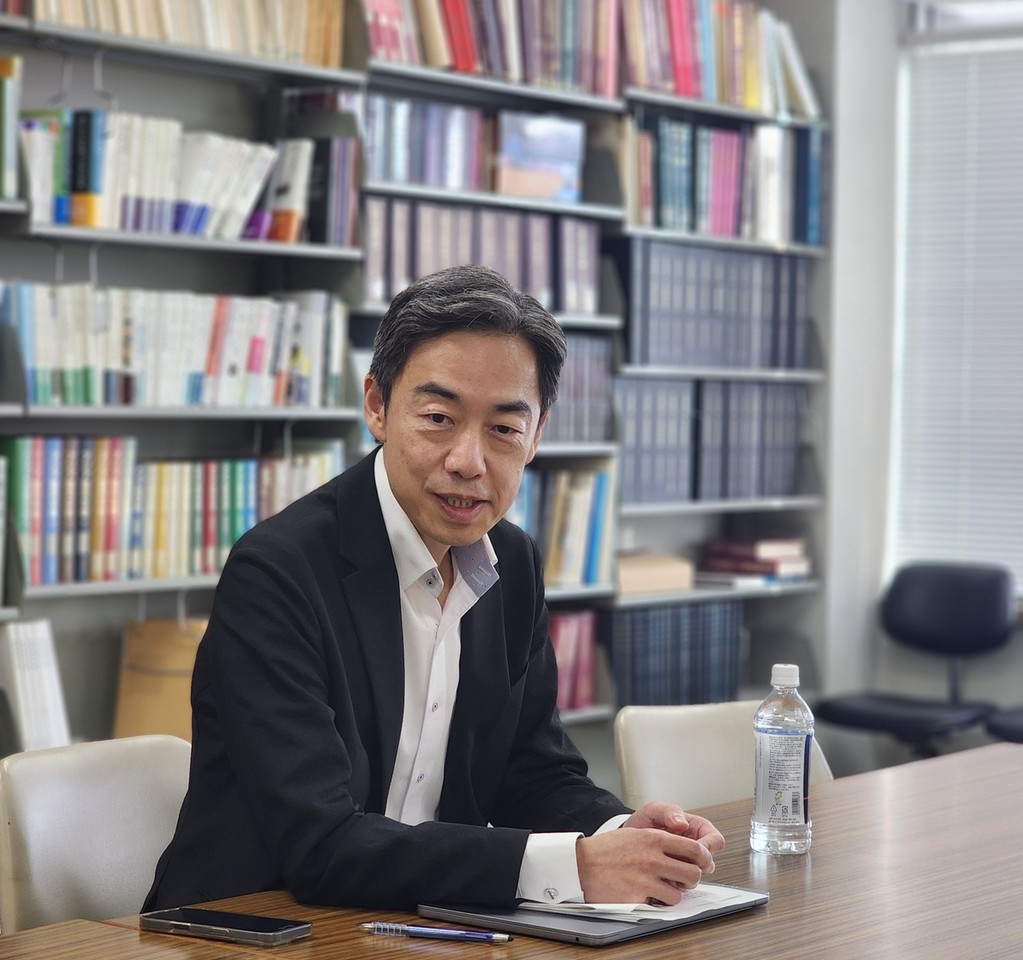
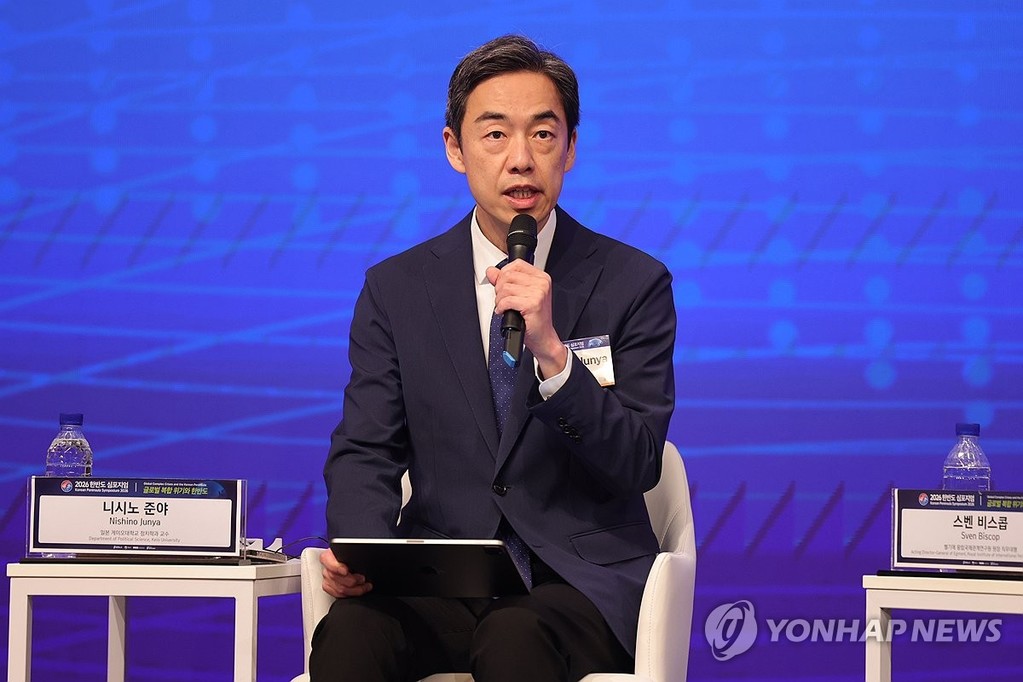
TOKYO/SEOUL, Oct. 30 (Yonhap-Join Press Corps) -- A summit between North Korea and the United States is likely to be difficult within this year, a leading Japanese scholar has said, doubting that either side is ready for a meeting that leads to any "meaningful" negotiations.
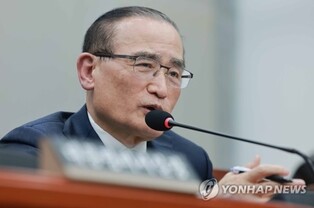
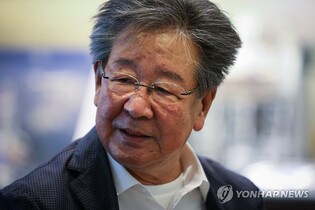
Junya Nishino, a professor of political science at Tokyo's Keio University, made the remarks in a meeting with Korean reporters in Tokyo on Oct. 22, as U.S. President Donald Trump has expressed interest in meeting with North Korean leader Kim Jong-un this year.
"I think a summit (between Trump and Kim) this year will be difficult," Nishino said, adding Trump's interest in resuming diplomacy with Kim stems more from personal rapport than from a U.S. policy aimed at negotiations.
Speculation has arisen that Trump may want to meet Kim on the occasion of his visit to China next month for the Asia-Pacific Economic Cooperation (APEC) summit.
"What we want is a meeting that leads to negotiations," he said. "I do not think either the U.S. or North Korea is prepared for that."
"A meeting could take place, but I doubt very much that it would amount to the kind of meaningful meeting we are hoping for," he added.
On South Korea-Japan relations, he said the two countries can keep their ties stable by managing historical issues rather than trying to settle them.
"Historical issues and unresolved questions concerning the past will remain challenges, but cooperation is still possible even when such issues remain unresolved," he said.
"The best approach for now is to keep expanding cooperation while managing historical issues, so they matter less to the overall relationship."
Nishino, a well-known expert on Korean politics and East Asian relations, credited the shuttle diplomacy between South Korean President Lee Jae Myung and Japanese Prime Minister Sanae Takaichi for the steady ties.
He warned, however, that the ties "require constant and careful management," as domestic politics shape each leader's stability and room to maneuver.
"It is important to manage the relationship carefully, so that domestic political instability does not spill over into diplomatic issues," he said.
"Japanese tend to judge South Korea by what its president does, just as South Koreans tend to see Japan through its prime minister. That is why leadership matters."
On the Sado mine memorial ceremony, one of the issues on which the two sides disagree, Nishino pointed to "a considerable gap" in how each country understands history.
"I don't think it will be easy to bridge that gap," he said. "Nevertheless, that does not mean a joint memorial ceremony is impossible. The diplomatic authorities on both sides will have to continue working to find common ground."
South Korea skipped Japan's Sept. 12 memorial ceremony for Korean victims of wartime forced labor at the mine complex for the third consecutive year.
Seoul's boycott came after the two countries failed to reach an agreement on key issues surrounding the commemoration, such as how to address the coercive nature of the mobilization of Korean workers.
Turning to South Korea's push to retake wartime operational control (OPCON) of its troops from Washington, he said it would bring major changes to the security framework on the Korean Peninsula and also have a "considerable" effect on Japan's own security.
He noted some may worry that a shift in the South Korea-U.S. combined defense structure could complicate the North Korean issue, especially Pyongyang's nuclear threat.
But Nishino said he did not think the worry was substantial, citing the United States' robust extended deterrence commitment to Japan and South Korea.
Japan is eager to advance not only trilateral cooperation with Seoul and Washington, but also bilateral security cooperation with South Korea, and has expressed its intention on several occasions, he added.
Beyond their bilateral disputes, Nishino said outside pressures are also weighing on both countries.
The Trump administration, which "views alliance differently from previous administrations," is having a "significant impact" on the two countries, he said. Still, he saw room to cooperate in areas, such as energy and supply chains, and to help steady an international order the Trump administration has shaken.
"I see this as a shared challenge for Japan and South Korea," he said.
(END)
[Copyright ⓒ K-VIBE. All rights reserved. Unauthorized reproduction and redistribution are prohibited.]