(ATTN: CHANGES headline, lead; UPDATES with details throughout)
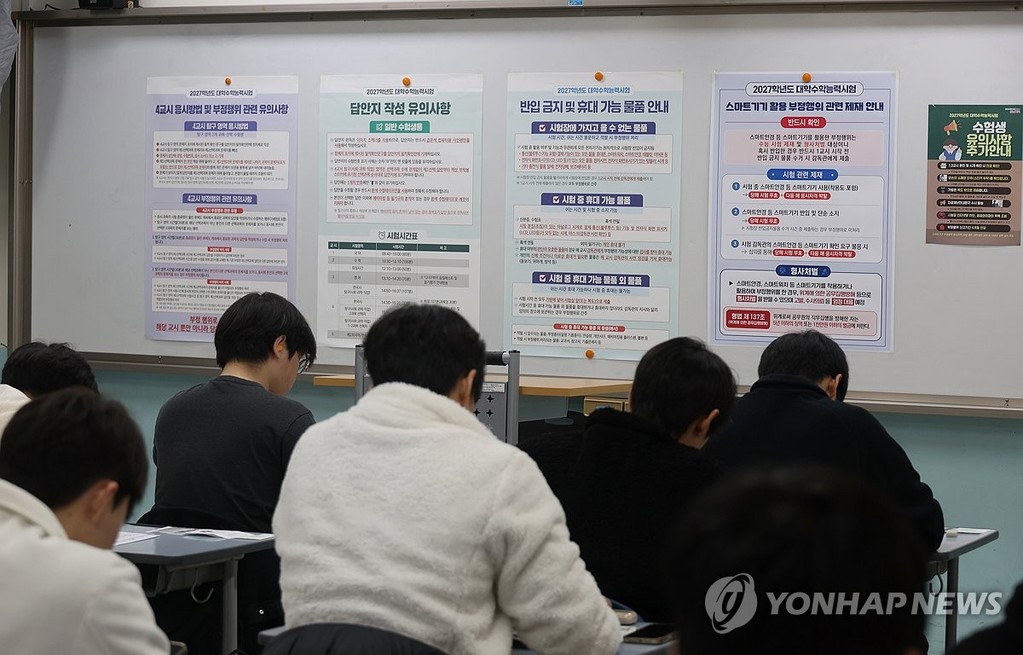
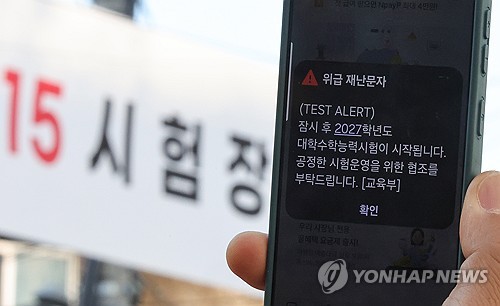
SEOUL, Nov. 19 (Yonhap) -- Unprecedented disaster alert messages were sent Thursday in an apparent attempt to catch those seeking to cheat on the national college entrance exam, exposing at least 22 test-takers who failed to turn in their smartphones before the start of the test as required, officials said.
Three alert messages had been sent as of 3 p.m. as part of anti-cheating measures for this year's College Scholastic Ability Test (CSAT). The state-issued alert messages are designed to reach nearly all mobile phones nationwide and ring a loud alarm even when devices are muted.
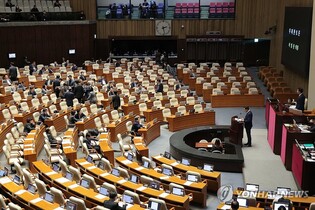
"By sending the emergency disaster message, 22 smartphones have been found," Vice Education Minister Choi Eun-ok said in a briefing.
Choi said stern measures, including filing criminal complaints, will be taken against the 22 individuals with unsubmitted phones if acts of misconduct are confirmed.
The first alert message was sent just before the start of the annual exam. Two more alerts were sent in the afternoon, but the authorities have yet to disclose whether any additional individuals have been caught for suspected misconduct.
Meanwhile, officials at a test center in Yongin, just south of Seoul, found a miniature camera and an earphone at the site, and informed police of the devices for an investigation.
The CSAT, the nation's most consequential academic exam, began at 1,312 test centers across the country at 8:40 a.m. and is scheduled to end at 5:45 p.m.
A total of 551,864 people have applied for this year's exam, with authorities deploying some 75,000 proctors and around 8,400 additional personnel to catch cheaters across test centers nationwide.
The government has strengthened anti-cheating measures for the CSAT after the top scorer on this year's certified tax accountant exam recently confessed to cheating with the help of AI and digital devices, sparking a public outcry.
Officials will check every pair of glasses worn by test-takers for hidden cameras, while buttons on clothing will be covered with stickers to block any miniature cameras.
All electronic devices are banned from exam rooms, with test-takers permitted to only bring in pencils.
The government seeks to ban those caught cheating from taking the exam again for 10 years and offer a reward of up to 100 million won (US$75,000) for those who report misconduct.
Outside a high school in southern Seoul before the exam, test-taker Yoon Seong-hwan said he wore contact lenses instead of glasses to avoid being examined.
"I usually wear glasses but I wore contact lenses because I felt a bit uneasy about being checked (for misconduct)," the 18-year-old said. "I hope all students take the CSAT well without any misconduct."
Parents cheered on their children as they entered test centers, with many worrying the strengthened anti-cheating measures could lead to unwanted distractions during the high-stakes test.
Lee Jeong-ok, whose son is taking the exam at a high school in central Seoul, said she took off all the buttons from her son's clothes at his request.
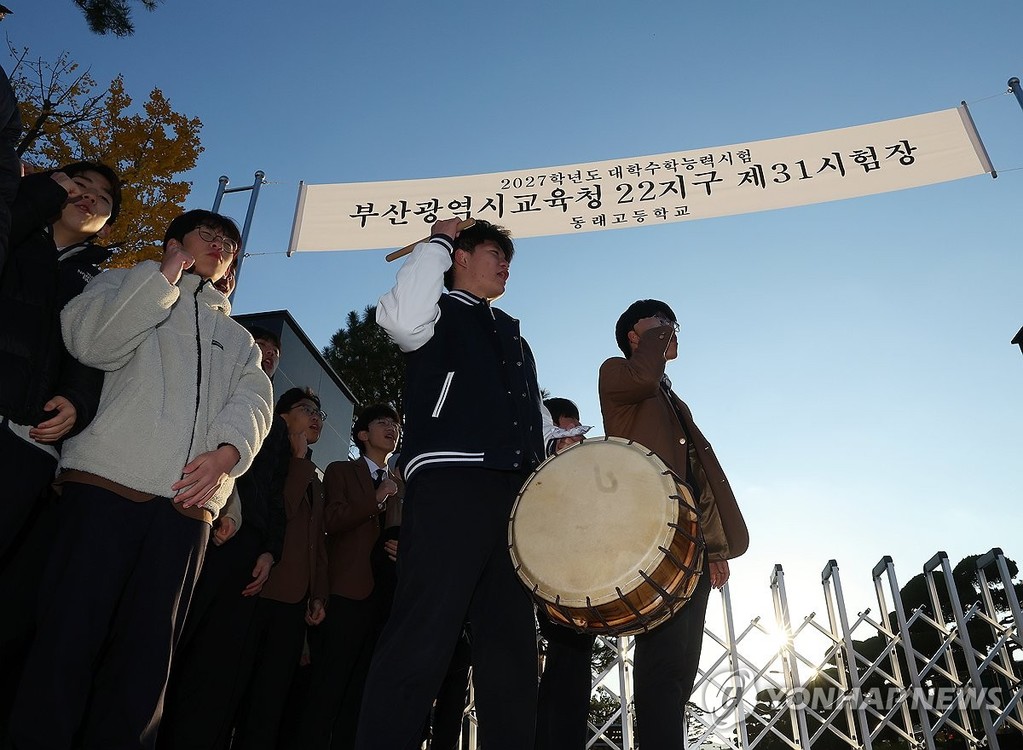
The CSAT is the culmination of years of grueling studies for many students and is widely seen as a major life event in South Korea, where the university one goes to can heavily influence career prospects.
Given the stakes, the government makes every effort to cater to their needs on exam day.
All aircraft takeoffs and landings across the country were restricted from 1:05 p.m. to 1:40 p.m. to minimize noise during the English listening portion of the exam.
All airborne aircraft, excluding those in emergency situations, were required to remain in the air at an altitude of 3 kilometers or higher under the direction of air traffic control authorities.
In Seoul, the subway service was increased by 27 runs to help students get to their test centers on time.
The local stock market, which typically opens at 9 a.m. and closes at 3:30 p.m., opened an hour later to help ease morning rush-hour traffic and will close at 4:30 p.m.
(END)
[Copyright ⓒ K-VIBE. All rights reserved. Unauthorized reproduction and redistribution are prohibited.]