(ATTN: RECASTS headline, lead; UPDATES with details of joint declaration in paras 2-6, 23-24; REPLACES photo)
By Chang Dong-woo
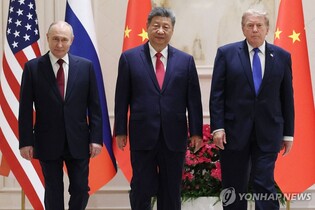
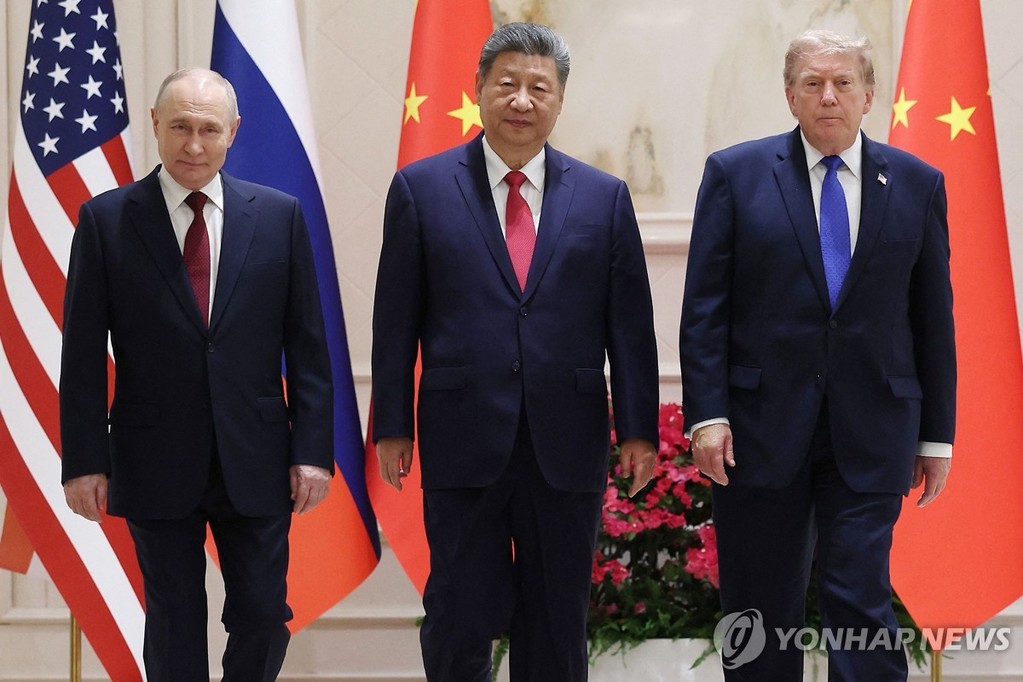
SHENZHEN, China, Nov. 19 (Yonhap) -- The leaders of the United States, China and Russia agreed Thursday to conduct a dialogue on reducing nuclear risks and preventing proliferation, but made no mention of North Korea or the denuclearization of the Korean Peninsula in a joint declaration issued after their unprecedented trilateral summit.
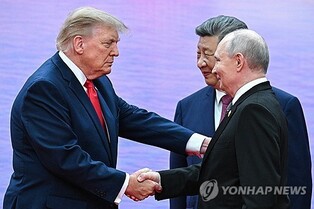
U.S. President Donald Trump, Chinese President Xi Jinping and Russian President Vladimir Putin met for the three-way summit on the sidelines of the Asia-Pacific Economic Cooperation (APEC) summit at the Kylin Villa in Shenzhen, China. Trump had expressed his intention to discuss nuclear arms reductions and other major international issues at the three-way summit.
In the four-point joint declaration issued after the summit, the leaders agreed that nuclear war cannot be won and must never be fought, pledging to "conduct a dialogue on reducing nuclear risks and preventing the proliferation of nuclear weapons," according to China's official Xinhua News Agency.
They also committed to reforming the United Nations to enable the world body to respond more effectively to global challenges and fulfill its mission of maintaining international peace and security.
On energy security, the leaders agreed to increase the production and supply of refined petroleum products for the benefit of countries worldwide, while reaffirming the importance of maintaining stable energy flows.
The declaration also emphasized the importance of state consent and respect for the immunities of state officials, with the leaders agreeing that the International Criminal Court and similar bodies must not abuse their jurisdiction.
In his opening remarks at the summit, Trump emphasized the responsibility of the three countries to work together on major international security issues.
"As presidents of three of the world's largest countries, we have a special responsibility to maintain open, respectful and productive dialogue on issues impacting not just our people but the entire planet," Trump said.
Trump highlighted the three countries' nuclear arsenals, stressing their potential role in reducing the number of nuclear weapons worldwide.
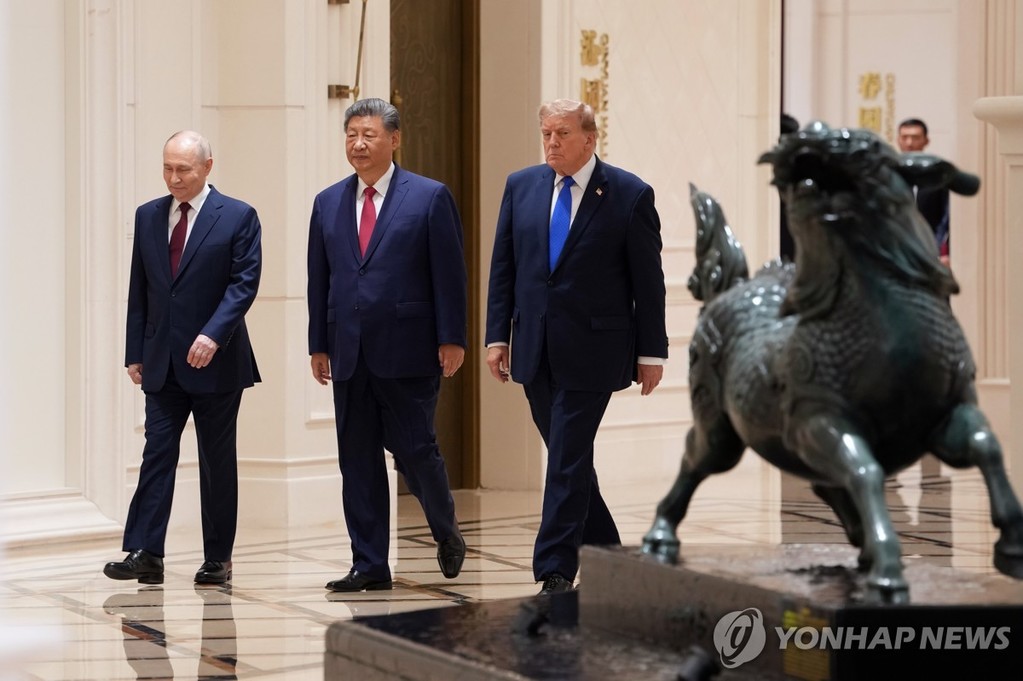
Trump acknowledged the difficulties of nuclear disarmament, noting that countries possessing nuclear weapons face difficulties in giving them up. "It's very hard to give them up as a leader of a country," he said.
Xi emphasized the importance of peaceful relations among major powers, saying cooperation would contribute to global stability while confrontation could lead to chaos, according to Xinhua.
"History is the best textbook," Xi was quoted as telling his U.S. and Russian counterparts. "We must remember history, and learn from it to shape the future."
The Chinese leader also said positive interaction between major countries is "not optional, but a must."
Putin proposed discussing global and regional economic relations, as well as energy security, during the trilateral meeting, according to Russia's Tass news agency.
"We should certainly discuss global and regional economic ties, and food and energy security," Putin was quoted as saying.
Putin also noted that the three countries share "common interests" in resolving regional conflicts, pointing to the Russia-Ukraine conflict as an example.
The summit ended after an hour without the leaders speaking to the media afterwards, according to foreign media reports.
Earlier in the day, Trump held separate bilateral meetings with Putin and Xi.
"We've had a great relationship for many years. We know each other for a long time, and I think a lot of wonderful things can come out of this, or at least start," Trump said during his meeting with Putin.
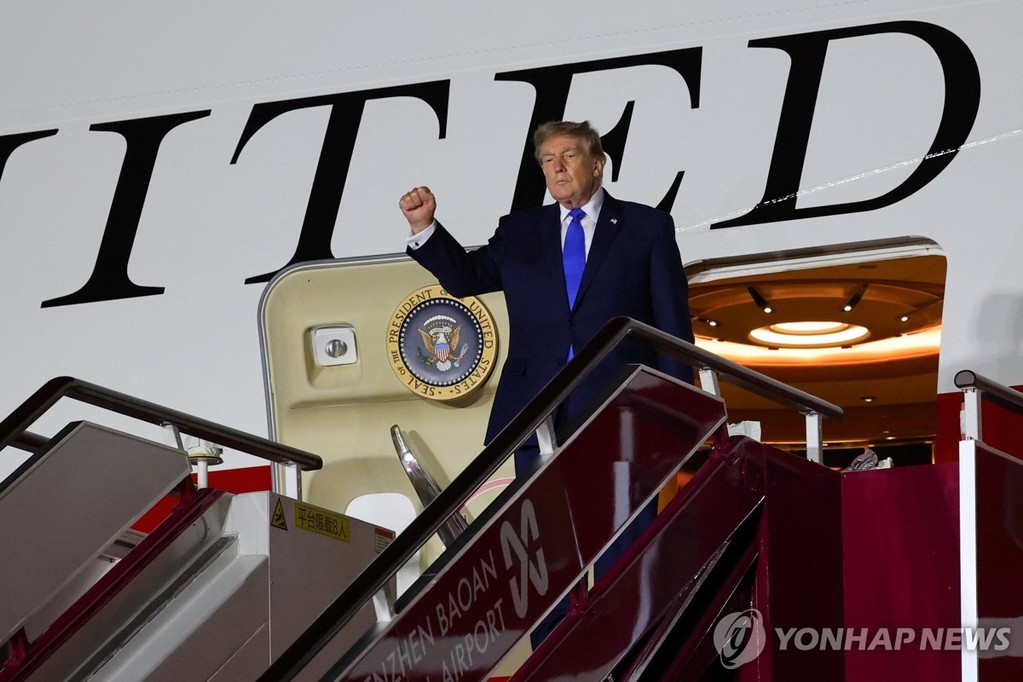
In the Trump-Xi meeting, their first in two months since their talks in Washington in September, Trump said Washington and Beijing shared an interest in ensuring the flow of energy through the Strait of Hormuz.
"Both the United States and China have an interest in ensuring that energy flows through the Strait of Hormuz, and that Iran cannot have a nuclear weapon," Trump said.
Trump had also expressed optimism about potential cooperation with China on the war in Ukraine. "We're looking to both help with respect to the war with Russia and Ukraine," he said.
Thursday's joint declaration made no reference to North Korea's nuclear weapons program or the denuclearization of the Korean Peninsula, despite highlighting the leaders' commitment to addressing nuclear proliferation.
Meanwhile, a highly speculated surprise meeting between Trump and North Korean leader Kim Jong-un failed to materialize during the U.S. president's visit to China, as Trump departed Shenzhen aboard Air Force One following the trilateral summit to return to Washington, according to a White House pool report.
Trump had raised the possibility of meeting Kim during his Asia trip, which included a stop in Manila for the Association of Southeast Asian Nations (ASEAN) summit.
The U.S. president reiterated the possibility during a meeting with Quad leaders in Manila on Tuesday, saying Kim "would like to" attend the APEC summit.
U.S. Secretary of State Marco Rubio said Wednesday that Trump was serious about engaging with Kim, while making clear that no meeting had been confirmed.
The White House and the U.S. State Department have not responded to an email inquiry from Yonhap News Agency on whether a Trump-Kim meeting was scheduled.
(END)
[Copyright ⓒ K-VIBE. All rights reserved. Unauthorized reproduction and redistribution are prohibited.]