 |
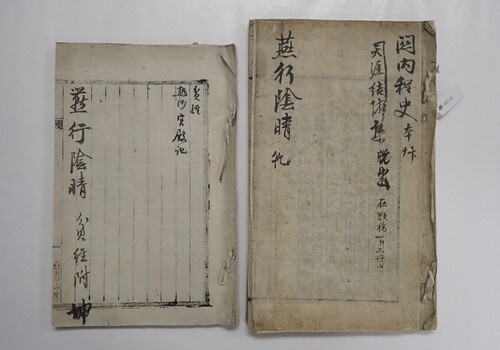
| ▲ This photo provided by the Korea Heritage Service (KHS) shows parts of the first manuscripts of Park Ji-won’s "Yeolha Ilgi.” (PHOTO NOT FOR SALE) (Yonhap) |
SEOUL, Dec. 31 (Yonhap) -- A draft manuscript of "Yeolha Ilgi," a seminal work by late Joseon-era Silhak scholar Park Ji-won (1737–1805) documenting Qing dynasty culture, will be designated a national treasure, the Korea Heritage Service (KHS) said Wednesday.
The KHS said it plans to designate a collection titled "Draft Manuscripts of Park Ji-won’s Yeolha Ilgi," housed at Dankook University’s Seok Juseon Memorial Museum, as a treasure.
Park wrote the work after traveling to Qing China in 1780 to attend celebrations marking the 70th birthday of Emperor Qianlong. He visited key cities, including Yanjing (present-day Beijing) and Rehe, and recorded his experiences upon returning to Joseon.
Written in diary form, "Yeolha Ilgi" offers detailed observations of Qing China’s advanced material culture as well as Park’s exchanges with contemporary intellectuals.
The materials slated for designation consist of four types in eight volumes and represent Park’s earliest extant draft versions, handwritten by the author himself after returning from Qing China.
Among them, the volumes titled "Yeonhaeng-eumcheong (Fair and Foul Weather During the Qing Journey), Vols. 1 and 2" contain references to Western learning not found in later, definitive editions of "Yeolha Ilgi," giving them particular academic value.
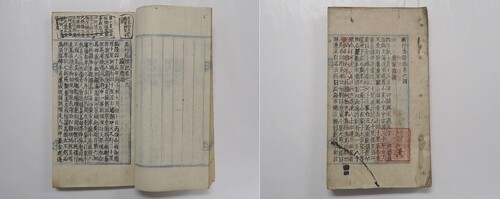 |
| ▲ This photo provided by the Korea Heritage Service (KHS) shows parts of the first manuscripts of Park Ji-won’s "Yeolha Ilgi.” (PHOTO NOT FOR SALE) (Yonhap) |
The volumes "Yeonhaeng-eumcheongnok 4" and "Yeonhaeng-eumcheonggi 3" are also considered significant as they show the earliest forms among Park’s surviving autograph manuscripts.
According to the KHS, the drafts provide insight into the process through which one of the late Joseon period’s most representative Silhak texts was compiled and later revised.
“They allow scholars to examine the original form of ‘Yeolha Ilgi’ at the time of its creation, as well as the subsequent revisions and adaptations made by Park himself and his descendants,” a KHS official said.
The KHS also announced plans to designate three additional items as treasures: "Amitabha Preaching Painting of Hyeondeungsa Temple in Gapyeong," "Seated Stone Vairocana Buddha from the Jingu Temple Site in Imsil," and "Seated Stone Sakyamuni Buddha Triad and Reliquaries from Sinheungsa Temple in Yangsan."
The Buddhist painting at Hyeondeungsa, produced in 1759, delicately depicts Amitabha Buddha preaching in the Pure Land, surrounded by attendants, on a silk background. It is the earliest known Amitabha preaching painting in the Seoul-Gyeonggi region and provides valuable insight into regional Buddhist painting styles of the period.
The stone Buddha statue from the Jingu temple site in Imsil, believed to date to the late 9th century during the Unified Silla period, lacks its halo and part of its left wrist but is noted for its balanced proportions and refined carving. It is considered a rare example of a seated stone Vairocana Buddha in the Jeolla region.
The Sinheungsa statues in Yangsan were completed and enshrined in 1682. Made of bulseok stone, a material commonly used after the 17th century, they were created with the participation of the sculptor monk Seungho. The reliquaries found inside the statues are regarded as important materials for understanding Buddhist rituals of the time.
The KHS said it will review public feedback during a 30-day notice period before finalizing the designations following deliberation by the Cultural Heritage Committee.
(C) Yonhap News Agency. All Rights Reserved

![[풀영상] 2025 MBC 방송연예대상 레드카펫|유재석·전현무·기안84·김연경·세븐틴 부승관·박지현·제베원(ZB1) 규빈·투어스(TWS) 도훈·주우재·하하 외](/news/data/20251229/p179586605817354_616_h.jpg)