 |
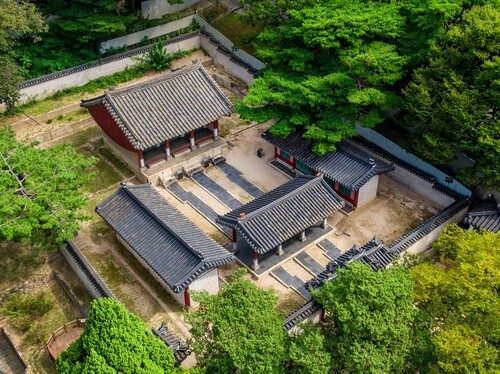
| ▲ This photo provided by the Korea Heritage Service shows Yuksanggung and Yeonhogung in Chilgung, the seve- shrine complex with the ancestral tablets of royal concubines of the Joseon Dynasty and the Korean Empire. (PHOTO NOT FOR SALE) (Yonhap) |
SEOUL,
Jan. 7 (Yonhap) --
The Korea Heritage Service said on Wednesday that beginning Feb. 1, Chilgung will shift from open access to limited viewing.
Chilgung is a shrine complex where ancestral tablets of royal concubines of the Joseon Dynasty and the Korean Empire—who gave birth to kings but were never crowned queen—are enshrined and memorial rites are held.
Located southwest of Cheong Wa Dae, Chilgung had been closed to the public since 1968 before reopening in November 2001. After Cheong Wa Dae itself was opened to the public, the site had been freely accessible.
However, with presidential facilities, including President Lee Jae-myung’s office, moving back to Cheong Wa Dae, the center decided to introduce a reservation system, citing safety concerns and visitor convenience.
Under the new system, visitors will need to make online reservations in advance. Tours will be offered five times a day—at 10 a.m., 11 a.m., and 2 p.m., 3 p.m. and 4 p.m.—with each session lasting about 40 minutes. Each tour will be limited to 30 people, allowing up to 150 visitors per day.
A center official said visitors will be guided by a cultural heritage interpreter, with a safety officer accompanying the group from behind.
Chilgung began as Yuksanggung, a shrine dedicated to Lady Choi Suk-bin, the mother of King Yeongjo (r. 1724–1776). Originally known as Sukbinmyo, it was later renamed Yuksanggung. The shrine was destroyed by fire in 1882 and rebuilt the following year. In 1908, shrines dedicated to royal concubines scattered across various locations were consolidated, forming what is now known as Chilgung.
Today, Chilgung consists of seven shrines: Yuksanggung, Jeogyeonggung, Daebingung, Yeonhogung, Seonhuigung, Gyeongugung and Deokangung.
(C) Yonhap News Agency. All Rights Reserved