 |
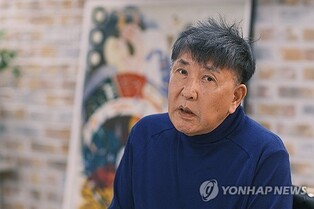
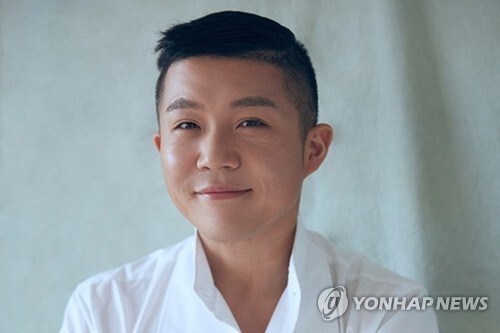
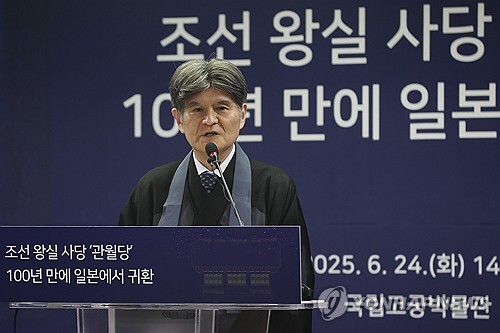
| ▲ Takao Sato, head priest of Japan’s Kotoku-in temple and owner of the Joseon royal shrine building "Gwanwoldang," delivers remarks during a news conference, "Joseon Royal Shrine Gwanwoldang Returns to Korea After 100 Years," held at the National Palace Museum of Korea in Jongno District, Seoul, on June 24, 2025. (PHOTO NOT FOR SALE) (Yonhap) |
SEOUL,
Dec. 9 (Yonhap) --
The agency selected 10 individuals and two organizations as this year’s contributors to the protection of national heritage, including Takao Sato, the head priest of Japan’s Kotoku-in temple.
Sato played a key role in the return of "Gwanwoldang," believed to have been a royal ancestral shrine building. A professor of ethnological archaeology at Keio University, he signed an agreement in June with the Korea Heritage Service and the Overseas Korean Cultural Heritage Foundation to donate all components of the structure unconditionally.
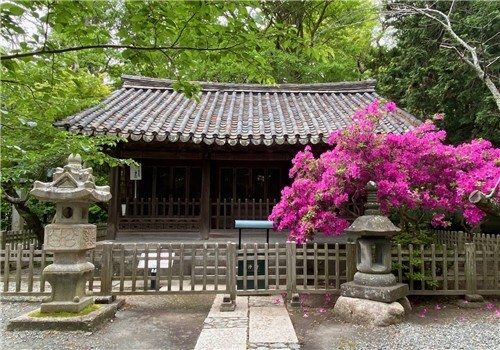 |
| ▲ This image, provided by the Korea Heritage Service, shows Gwanwoldang in Kotoku-in, a Buddhist temple in Kamakura, Japan, before it was disassembled. (PHOTO NOT FOR SALE) (Yonhap) |
The building returned to Korea for the first time in about 100 years after being transferred in the 1920s, during Japan’s colonial rule of Korea, from the Joseon Plant Bank to Japanese businessman Kisei Sugino (1870–1939).
Since becoming the temple’s head priest in 2002, Sato had resolved to return the structure to Korea and reportedly carried out the plan despite pressure from some right-wing groups in Japan. He also personally covered all costs for dismantling and transporting the building.
In a June interview with South Korean media, Sato said he believed the structure should return to its original home in Korea to honor its historical meaning.
The returned materials are currently being stored at the warehouse of the Foundation for the Promotion of Traditional Architectural Repair Technology in Paju, Gyeonggi Province.
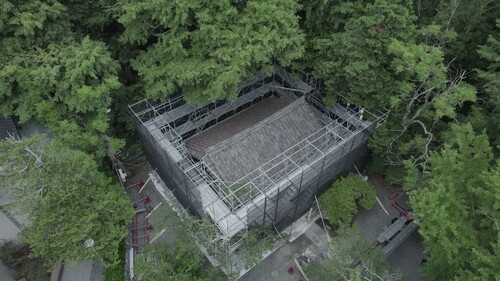 |
| ▲ This image, provided by the Korea Heritage Service, shows Gwanwoldang in Kotoku-in, a Buddhist temple in Kamakura, Japan, after it was partly disassembled. (PHOTO NOT FOR SALE) (Yonhap) |
The Korea Heritage Service said Sato was selected for the presidential citation for contributing to friendship and exchange between Korea and Japan through cultural heritage.
The Order of Cultural Merit, Silver Crown, will be awarded to Kim Sung-yul, holder of the national intangible heritage item "Suyong Yaryu"; Park Moon-yeol, holder of the national intangible heritage item "Duseokjang"; and Lee Sang-hae, professor emeritus at Sungkyunkwan University.
The Order of Cultural Merit, Bronze Crown, will go to Park Kang-chul, former director of the Jeonnam Cultural Heritage Research Institute, and Park Ho-jun, a national intangible heritage holder for traditional arrow-making.
Lee Sang-gil, head of the Hangang Tree Hospital, who has cared for some 1.12 million trees and published books on old and giant trees designated as natural monuments, will receive a Cultural Award.
Other recipients of the presidential citation include Bang Hwa-seon, a Jeonbuk provincial intangible heritage holder for fan-making; Cho Jung-hwa, director of the Baekje Capital Research Institute; the Gyeonggi Ceramic Museum of the Korea Ceramic Foundation; and the Yanggu County Goral and Musk Deer Center.
The awards will be presented later in the day at the "2nd National Heritage Day" ceremony to be held at Pungryu Theater in southern Seoul. National Heritage Day commemorates Dec. 9, 1995, when Seokguram Grotto, Bulguksa Temple, the Janggyeong Panjeon at Haeinsa Temple and Jongmyo Shrine were first inscribed on the UNESCO World Heritage list.
(C) Yonhap News Agency. All Rights Reserved