actor-filmography
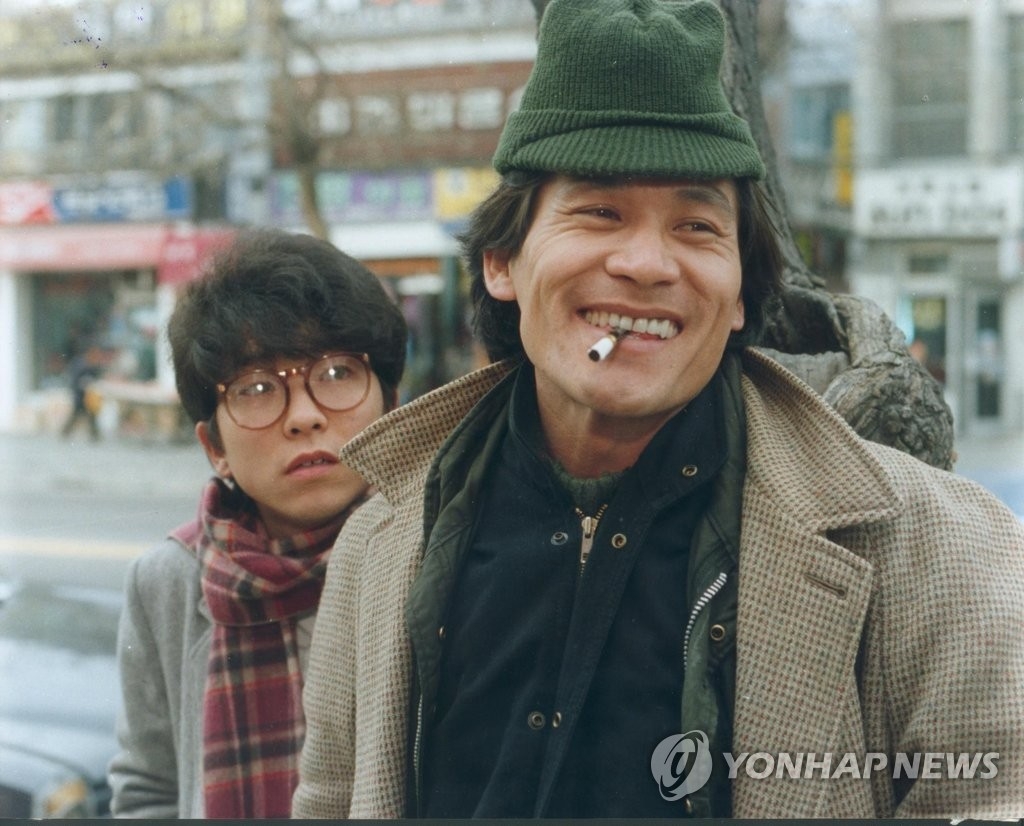 |
| ▲ Ahn Sung-ki (R) is seen in the 1984 film "Whale Hunting," in this still provided by the Korean Film Archive. (PHOTO NOT FOR SALE) (Yonhap) |
 |
| ▲ Ahn Sung-ki (L) laughs with director Lee Joon-ik on the set of the 2006 film "Radio Star," in this undated file photo. (Yonhap) |
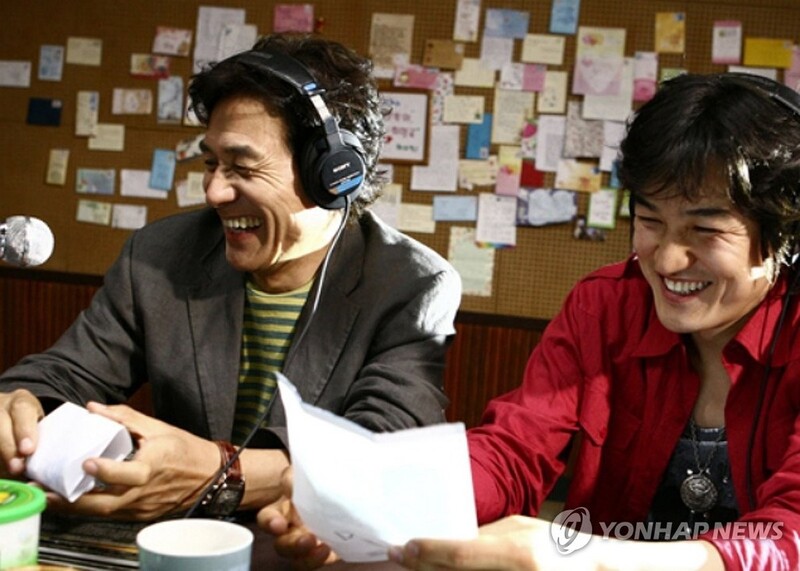 |
| ▲ Ahn Sung-ki (L) is seen in the 2006 film "Radio Star" alongside actor Park Joong-hoon, in this still provided by the Korean Film Archive. (PHOTO NOT FOR SALE) (Yonhap) |
 |
| ▲ Actor Ahn Sung-ki is seen in this undated file photo. (Yonhap) |
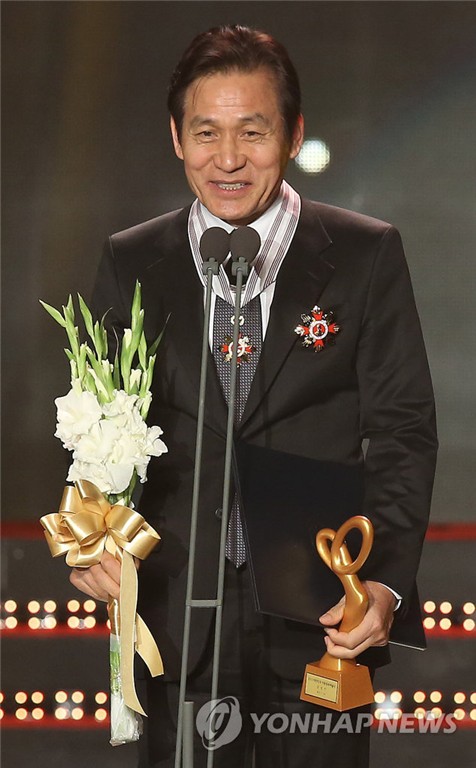 |
| ▲ In this file photo, Ahn Sung-ki makes an acceptance speech as he is awarded the Eungwan (Silver) Order of Cultural Merit, the second-highest class of the country's cultural decoration, on Nov. 18, 2013. (Yonhap) |
actor-filmography
'Nation's Actor' Ahn Sung-ki embodies decades of Korean cinema
By Woo Jae-yeon
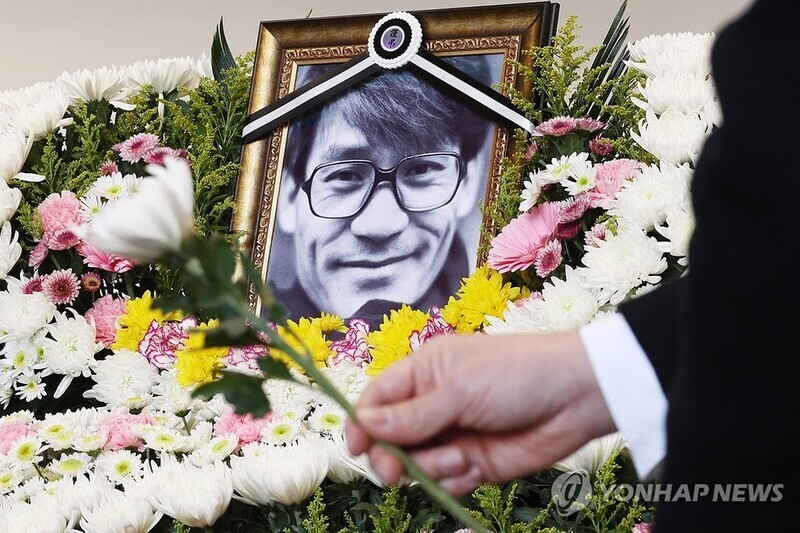
SEOUL, Jan. 5 (Yonhap) -- Actor Ahn Sung-ki, who died Monday at 74, stood as a pillar of Korean cinema for decades, delivering versatile performances in more than 140 films.
After making his debut as a child actor in "The Twilight Train" in 1957, he went on to build one of the most prolific careers in the Korean film industry, playing roles ranging from a pickpocket boy and a corrupt cop to a crime ring leader and an ordinary slum dweller.
Before temporarily leaving the film industry to fulfill his mandatory military service, he had appeared in approximately 70 films as a child actor. He returned to the big screen in the 1977 film "The Soldier and the Girls," successfully shedding his child actor image.
He went on to cement his prominence in the film scene, appearing in a slate of hit movies, including "A Small Ball Shot by a Midget" (1981), "Whale Hunting" (1984), "Our Sweet Days of Youth" (1987) and "Chilsu and Mansu" (1988), earning the affectionate nickname "Nation's Actor."
The late actor was one of the most beloved of his generation, cherished not only by audiences but also by renowned directors for his exceptional performances and ability to embody a wide range of characters.
For his role as a monk devoted to spiritual practice in director Im Kwon-taek's 1981 film "Mandala," he won Best Actor at the 1982 Baeksang Arts Awards, his first acting award from the ceremony. The 1982 film "The Iron Men" by Bae Chang-ho earned him another Best Actor at the 21st Daejong Film Awards.
In the 1999 action-thriller "Nowhere to Hide," he portrayed a killer chased by a detective played by Park Joong-hoon, his close friend and fellow actor. The rain-soaked fight scene between the two is still considered one of the most visually striking and stylish sequences.
Ahn continued to appear in major films, including "Silmido" (2003) -- the first Korean film to surpass the 10 million admissions milestone -- "Hanbando" (2006), "Unbowed" (2011) and "Hansan: Rising Dragon" (2022).
In the 2006 film "Radio Star," Ahn teamed up again with Park to portray a manager who steadfastly stands beside a singer (Park) who has faded from the spotlight. The two actors won Best Actor together at the Blue Dragon Film Awards in 2006. Ahn received the same award at the Daejong Film Awards in 2007.
His last film was "Noryang: Deadly Sea" (2023), director Kim Han-min's final installment in his trilogy about South Korea's legendary naval admiral Yi Sun-sin. Ahn made a special appearance as a military officer in the film.
Beyond acting, the late actor dedicated his life to the development of Korean filmmaking, serving as a core member of the country's prominent film festivals, including the Busan International Film Festival and the DMZ International Documentary Film Festival.
In 2013, he was awarded the Eungwan (Silver) Order of Cultural Merit, the second-highest class of the country's cultural decoration, and was chosen as a member of the National Academy of Arts in 2024, in recognition of his outstanding contributions to Korean cinema.
The retrospective of the actor hosted by the Korean Film Archive in 2017 named the event "Ahn Sung-ki: Persona of Korean Cinema," highlighting his illustrious career that left an indelible mark on Korean film history.
(END)
(C) Yonhap News Agency. All Rights Reserved