 |
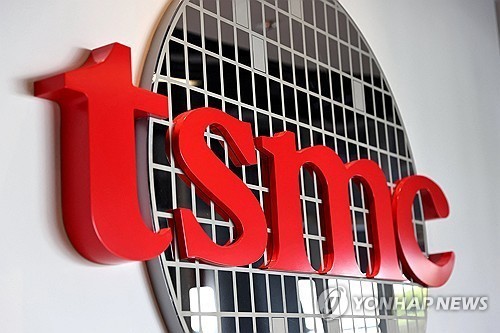
| ▲ This file photo, released by Reuters, shows the logo of Taiwan Semiconductor Manufacturing Co. at its headquarters in Hsinchu, Taiwan. (Yonhap) |
(LEAD) US-Taiwan trade deal
(LEAD) U.S.-Taiwan deal features 15 pct 'reciprocal' tariff, direct Taiwan investments totaling US$250 bln
(ATTN: ADDS more info in 5th para; RECASTS headline, lead, 7th para)
By Song Sang-ho
WASHINGTON, Jan. 15 (Yonhap) -- The United States and Taiwan signed a trade and investment agreement on Thursday, featuring a reduced U.S. "reciprocal" tariff on Taiwanese products and Taiwanese enterprises' commitment to making new, direct investments totaling US$250 billion in the U.S., the Commerce Department said.
In a fact sheet, the department said that the American Institute in Taiwan and the Taipei Economic and Cultural Representative Office in the U.S. signed the deal, which it said would establish a strategic economic partnership to "decisively" strengthen U.S. domestic semiconductor supply chains.
Under the deal, the U.S. is to lower its country-specific tariffs on Taiwanese goods to 15 percent -- the same rate as those on South Korean and Japanese products -- from 20 percent.
In return, Taiwanese semiconductor and technology enterprises will make "new, direct" investments totaling at least $250 billion to build and expand advanced semiconductor, energy, and artificial intelligence production and innovation capacity in the U.S., the department said.
The agreement also includes Taiwan's pledge to provide credit guarantees of at least $250 billion to facilitate additional investment by Taiwanese enterprises, supporting the establishment and expansion of the entire chip supply chain in the U.S.
Under their respective deals with U.S. President Donald Trump's administration last year, South Korea and Japan have committed to investing $350 billion and $550 billion in the U.S., respectively.
The U.S.-Taiwan agreement also states that sector-specific tariffs applied to Taiwanese auto parts, timber, lumber, and wood-derivative products will total no more than 15 percent.
Trump rolled out those industry-wide tariffs, invoking Section 232 of the Trade Expansion Act of 1962, a law that provides the president with the authority to adjust imports into the U.S. when he determines they threaten to impair national security.
The fact sheet pointed out that future Section 232 duties applied to Taiwanese semiconductors will benefit Taiwanese semiconductor producers that invest in the U.S.
Taiwanese companies building new U.S. semiconductor capacity may import up to 2.5 times that planned capacity without paying sectoral duties during the approved construction period, the fact sheet said.
Taiwanese companies that have completed new chip production projects in the U.S. will still be able to import 1.5 times their new U.S. production capacity without paying sectoral duties.
"This unprecedented commitment will strengthen U.S. economic resilience, create high-paying jobs, and bolster national security," the department said.
(END)
(C) Yonhap News Agency. All Rights Reserved





![[이런말저런글] 소라고 추위를 모르겠나, 길마보다 덕석을](/news/data/20260116/yna1065624915983844_736_h2.jpg)